
For engineering & technology B2B leaders — before you invest another dollar in AI, fix the part of your business that actually converts prospects to customers.
AI Won't Fix Your Conversion Problem. It Will Scale It.
Instant access · 30-minute read
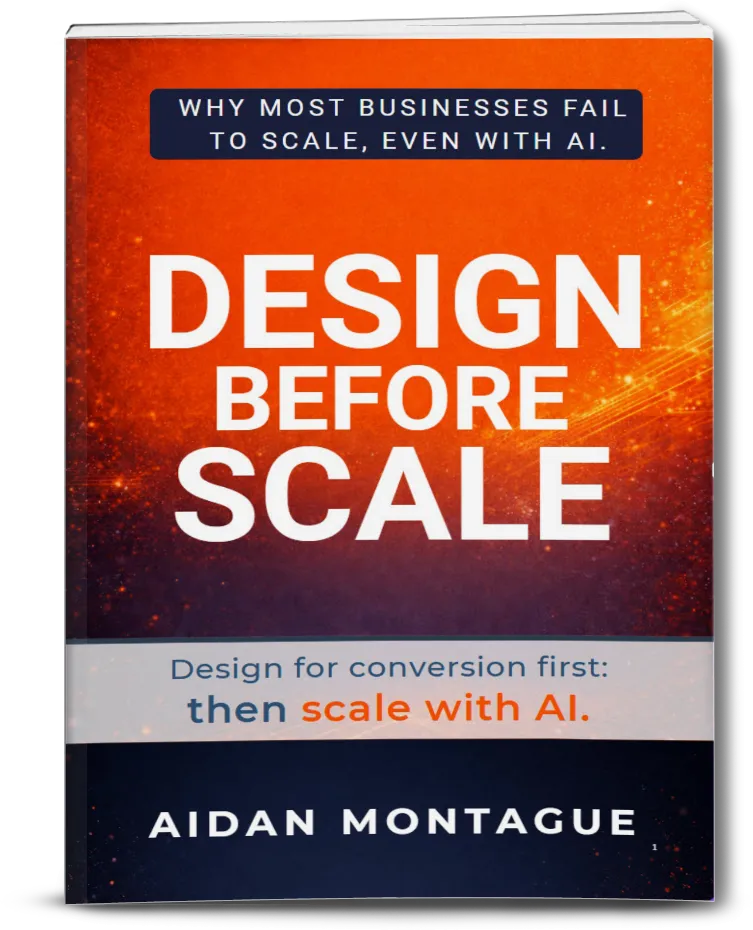
Where Most Businesses Start
Most teams think they have a lead generation problem.
In reality, it's a conversion problem.
They need to understand where conversion is being lost, long before they scale anything.
That understanding is what this book gives you. Not a workshop. Not a theory session. A clear way to see how opportunities move through your system, and where they break down.
Built from real-world experience across engineering, mining, technology and complex B2B environments.
Before You Spend More on Sales, Marketing, or AI, Confirm What You're Scaling.
If you sell complex engineering or technology solutions, growth is rarely constrained by lead generation alone. Conversion is usually the limiting factor.
Every business scales something — conversion
capability, or conversion friction.
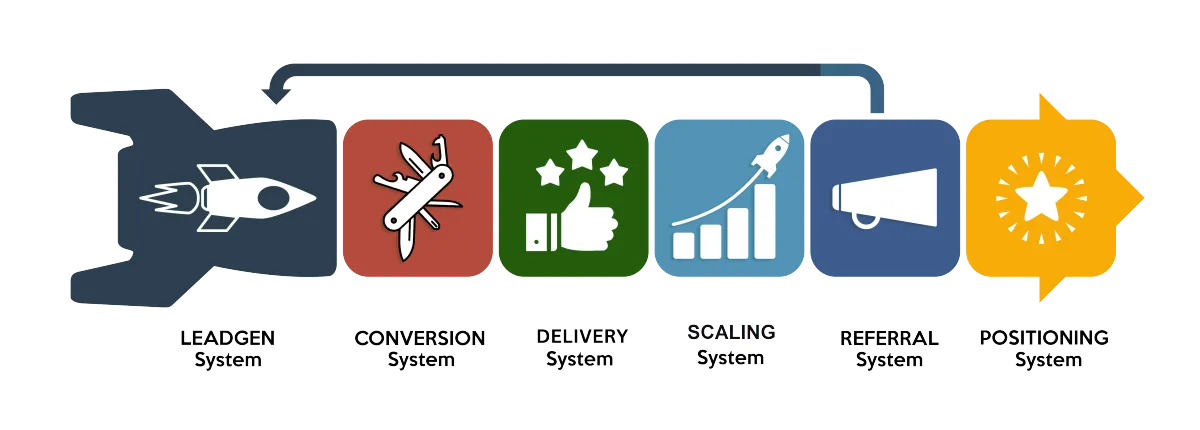
What Most Teams Do When Growth Slows
When growth slows, the advice is predictable.
Push harder on business development and sales
Hire an agency
Increase marketing spend
Post more content
The underlying assumption is simple: if results aren't improving, ramp up sales and marketing.
Most leadership teams follow this logic because it sounds reasonable, and because it's what everyone else does.
The Truth Most Businesses Discover Too Late
Sales is rarely the weakest link. The constraint lies elsewhere.
Under-engineered conversion systems lead to long sales cycles, sustained price pressure, and delayed decisions, even when you have a strong pipeline of qualified leads.
When conversion is hard, the cause is almost always upstream, long before sales conversations, campaigns, or content calendars begin.
If a business hasn't been deliberately designed to convert:
More sales activity doesn't fix it
More marketing amplifies the problem
More content feeds the hamster wheel
When leads exist in the pipeline but deals fail to progress, the constraint is rarely activity. More often it's an upstream design issue, usually around how the problem is framed, how value is articulated, or how buyer risk is addressed.
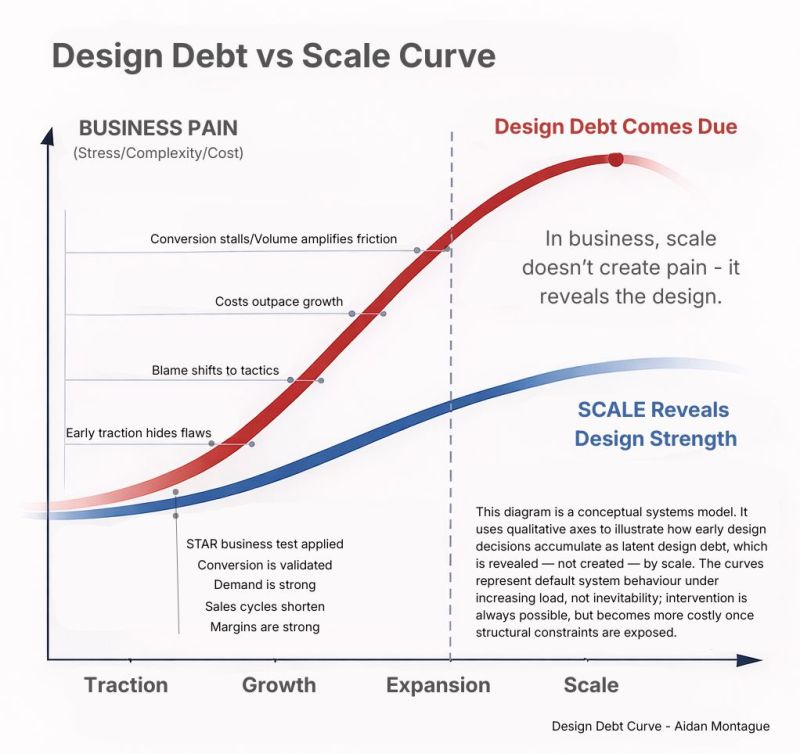
Scale doesn't resolve conversion problems. It exposes them.
Scale doesn't resolve conversion problems. It exposes them.
What That Creates in Practice
When activity is scaled before conversion is designed, the symptoms are consistent:
Sales cycles stretch
Buyers hesitate
Race to the bottom on price
Marketing is expensive but ineffective
What looks like a performance issue is usually a design issue. And the longer it goes unchecked, the more expensive it becomes to correct, because scale locks decisions in.
Why This Happens to Smart Teams
This isn't a failure of sales or marketing. It's a sequencing error.
Most businesses are taught to execute first and diagnose later. They're rewarded for visible activity, not upstream clarity.
By the time friction becomes obvious, the business has already accumulated design debt: implicit decisions reinforced by scale and difficult to unwind.
If you've been pushing harder without seeing proportional results, you didn't miss something obvious. You followed the default playbook.
What Needs to Be Designed Before Scale
Before increasing activity, spend, or volume, one question must be answered: is the business actually designed to convert?
That requires clarity on:
Market selection (or the sub-section of the market you're really for)
The critical problem being solved
How proof is being articulated
Where buyer risk is reduced
How ROI is assured
Not tactics. Not hacks. Design.
What This Book Does
Design Before Scale answers a single question: are you scaling conversion capability, or conversion friction?
It applies first-principles engineering thinking to growth, covering:
Why marketing fails when design is skipped
How positioning governs conversion
How design debt accumulates out of sight
Why scale is a stress test, not a strategy
How to identify the real constraint before it gets expensive
Design Before Scale is not a motivational exercise. It's not a collection of tactics. It's a structured way to work out whether pushing harder makes sense, before you pay to find out the hard way.
It costs very little to fix
your conversion design.
It costs a lot to
discover the
mistake at scale.
Imortant Note
If your business is already designed to convert, this will confirm it.
If it isn't, you'll see exactly where scale will get expensive.
Either way, you'll know before you spend more time, money, or effort scaling the wrong thing.
My guarantee is simple. Read it. If it doesn't show you something about your own business worth much more than you paid, email me and I'll refund you, no questions asked.
What Others Are Saying...
"
Aidan continues to be a trusted mentor to me, as a CEO of a fast-growing engineering startup focused on the utilities sector here in Western Australia. We are now well on the path to market leadership in our SCADA and control systems segment. Aidan's real-world experience and strategic input has been a major factor in our continued growth.
Yu J Z
Founder and CEO, SCADA/IIoT Startup, Perth WA
"
Aidan has enthusiastically imparted his systems and high-level thinking, and I look forward to our continuing association.
Fiona M
Managing Director, Engineering Consultancy (Mining), Western Australia
"
I have held leadership positions in some of the world's largest technology companies, and Aidan's engineering approach to marketing and business growth is the most practical and effective I have encountered.
David B
Co-Founder and Senior VP, Technology Start-up, Sydney



Aidan featured In the media: Sky News Business (Heidi Armstrong), Radio 2GB - "Nights" with Steve Price and "Money" with Ross Greenwood.